

Day of the Dead: What Feels Normal in Mexico Looks Extraordinary From the Outside.
Two Ways of Looking at the Same Table
To an outsider, Día de Muertos looks like a spectacle: smiling skulls, parades, painted faces, orange flowers everywhere. For a Mexican family, though, it is something much simpler and far more intimate: setting the table for those who are no longer with us.
That gap between what is seen and what is lived is the subject of this piece. In Mexico, remembering the dead with food, music, and laughter is not an eccentricity. It is simply normal. What surprises the world is, to us, a home custom.
Death in Everyday Life
In many Mexican homes, the altar goes up without any special ceremony, the way you would decorate for a visit you have been looking forward to. The photos of the grandparents come out, someone buys pan de muerto, the cempasúchil (marigolds) are tracked down at the market, and the family debates which stew Auntie liked best.
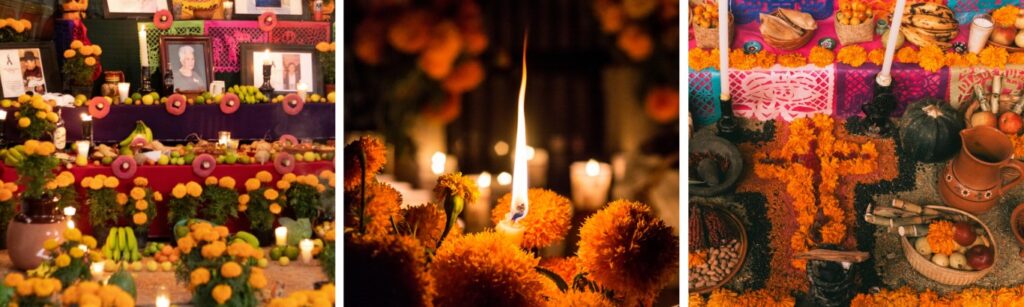
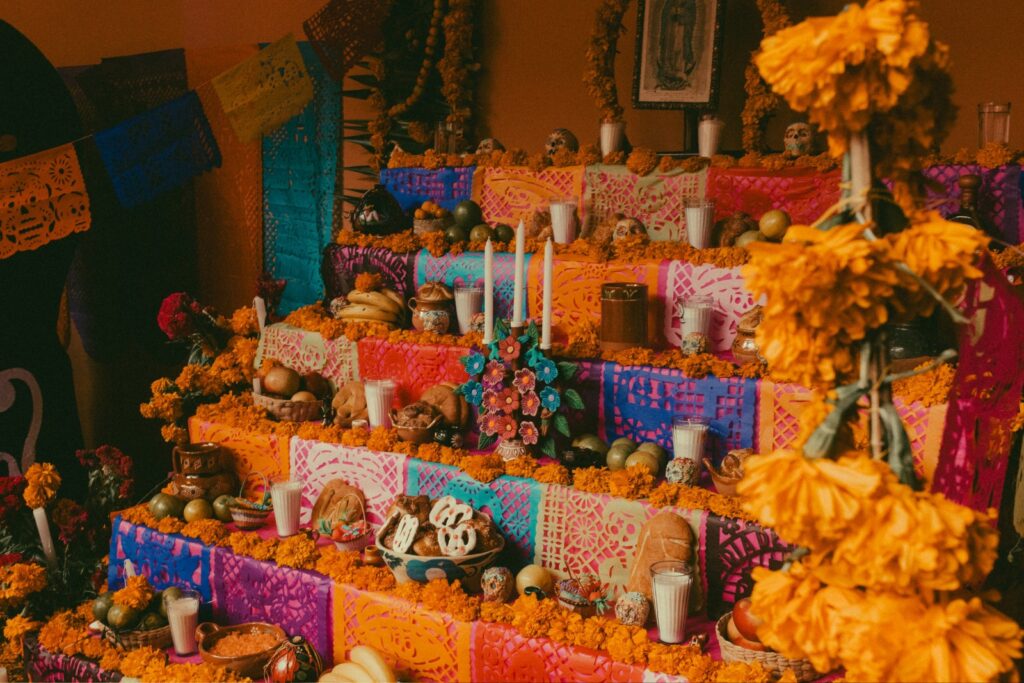
The ofrenda has its own language, one that almost all of us learn as children without anyone ever explaining it formally:
• Photographs show who the ofrenda is dedicated to.
• Cempasúchil (marigolds) mark the path with their colour and fragrance.
• Candles are the light that guides the souls back home.
• Water quenches the thirst of the departed after their long journey.
• Salt purifies, so the soul can pass between the two worlds.
• Pan de muerto stands for affection and fellowship.
• Favourite food and drink are the most personal gesture: the mole, the tequila, the sweet from childhood.
• Papel picado (cut-paper banners) represents the air and fills the ofrenda with colour and joy.
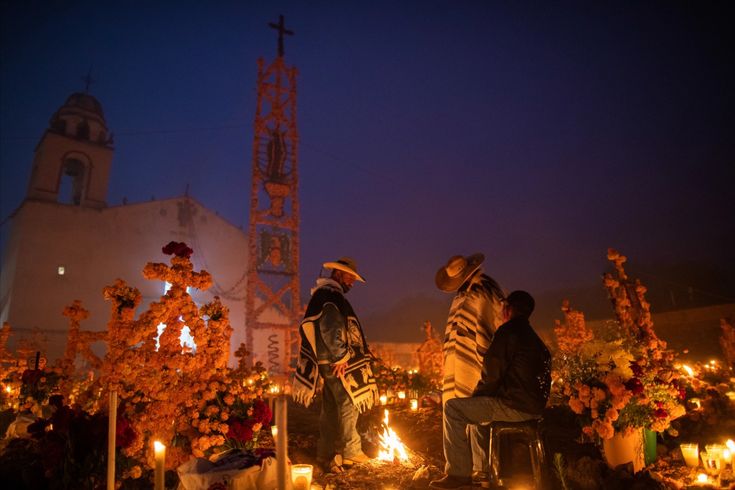
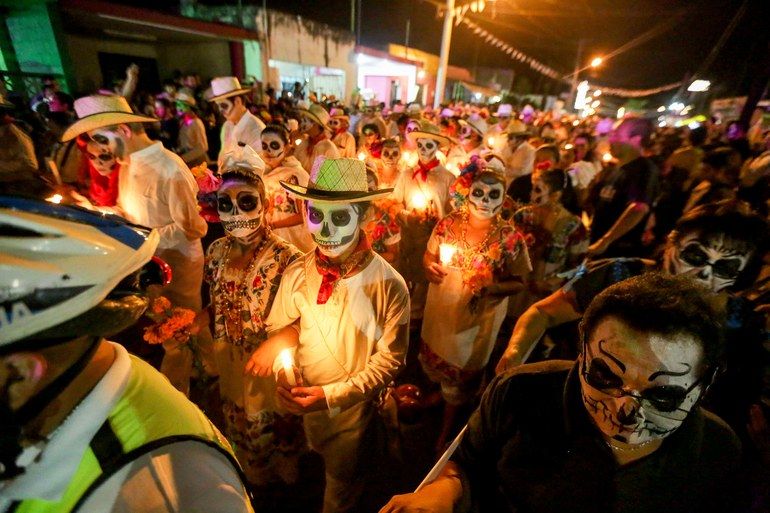
In many towns, the night is spent at the panteón (cemetery), cleaning and decorating the graves, chatting and sharing food. No one experiences it as macabre: it is a family reunion where some of the guests can no longer be seen.
Roots: Two Worlds in One Ofrenda
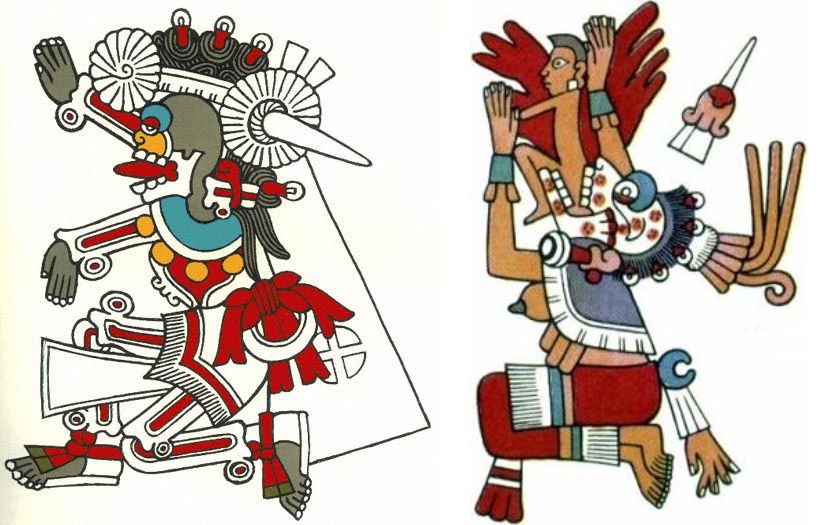
Día de Muertos is the child of an encounter between two worldviews. For the Mexica (Aztecs), death was the beginning of a journey to Mictlán, the realm of Mictlantecuhtli and Mictecacíhuatl. Their calendar devoted two festivals to the dead: Miccailhuitontli, for the young dead, and Hueymiccailhuitl, for the adult dead.
When the Spanish arrived, these practices met the Catholic feasts of All Saints’ Day (November 1) and All Souls’ Day (November 2). The result was something new: a deeply mestiza celebration, lived differently today in Michoacán, Oaxaca, Yucatán and Mexico City.
How much weight each root carries is still debated. Historian Elsa Malvido of the INAH (Mexico’s National Institute of Anthropology and History) argued that the festival’s origin is mainly Catholic and colonial, and that the idea of a purely Indigenous tradition was promoted in the twentieth century. What no one disputes is that today it is unmistakably Mexican.
In 2003, UNESCO proclaimed the Indigenous festivity of the Day of the Dead a Masterpiece of the Oral and Intangible Heritage of Humanity, and in 2008 it inscribed it on its Representative List. It was international recognition of something Mexico already knew: this tradition is one of the country’s richest cultural expressions.
Death as National Identity
Over time, death stopped being only a family practice and became a symbol of what it means to be Mexican. That shift was not spontaneous: it was built by artists, writers and the Mexican state itself throughout the twentieth century.
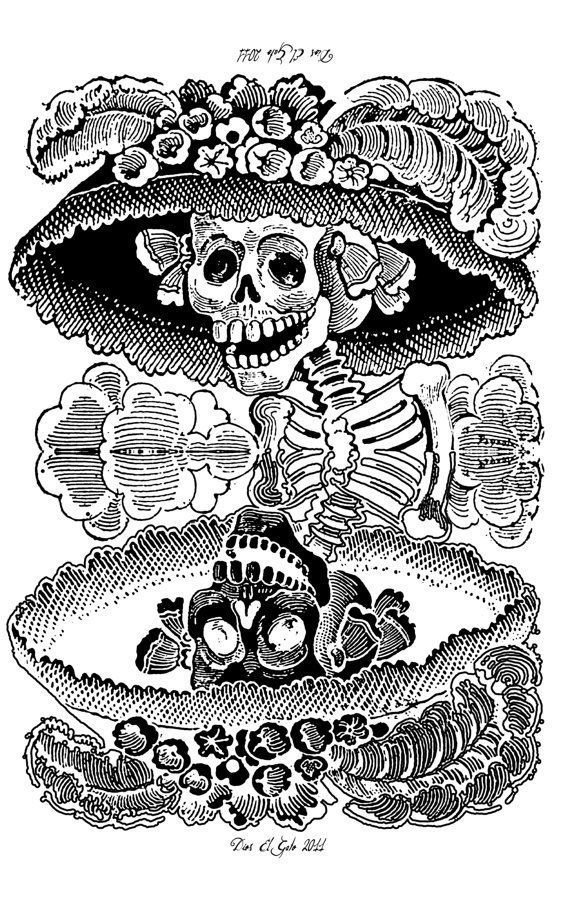
Around 1912, the engraver José Guadalupe Posada drew the “Calavera Garbancera,” a satire of people who hid their Indigenous roots to pass as European. Years after Posada’s death, the figure became popular under the name “Catrina.” In 1947, Diego Rivera gave her a full body and placed her at the centre of his mural Sueño de una tarde dominical en la Alameda Central (Dream of a Sunday Afternoon in the Alameda Central). In this way, a social caricature became a national emblem.
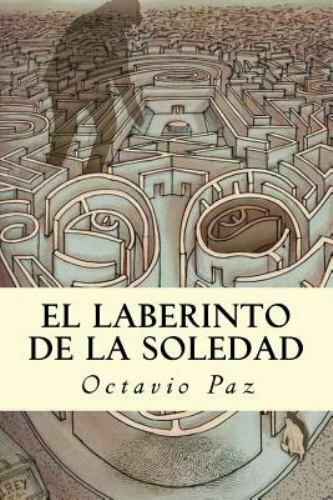
In 1950, Octavio Paz wrote in The Labyrinth of Solitude (El laberinto de la soledad) that Mexicans keep company with death, mock it and caress it. The line has been repeated ever since as if it were a truth about the character of an entire people. It deserves a careful reading: it describes a real cultural attitude, but also an idea that Mexico chose to tell about itself.
This takes nothing away from the tradition’s authenticity. On the contrary: it shows that Mexico’s relationship with its dead is so deep that it became a shared language, an art form, and a common identity.
How It Looks From the Outside
Outside Mexico, the image of Día de Muertos has been shaped mostly by film, fashion, and social media. Seeing the tradition from the outside has its value: it forces us to explain it. But it also brings some common misunderstandings.
• “It’s the Mexican Halloween.” It is not. Halloween plays with fear and the supernatural; Día de Muertos is an act of love and memory. Nobody dresses up to scare their grandparents.
• “It’s a celebration about death.” It is actually a celebration of the dead: specific people, with a name, a face, and a favourite dish.
• “It’s a parade.” Mexico City’s big parade began in 2016, inspired by a scene in the James Bond film Spectre (2015). Today it is part of the celebration, but the heart of the tradition is still in the homes and the cemeteries.
• “La Catrina is the tradition.” La Catrina is a powerful symbol, but skull makeup is no substitute for the ofrenda.
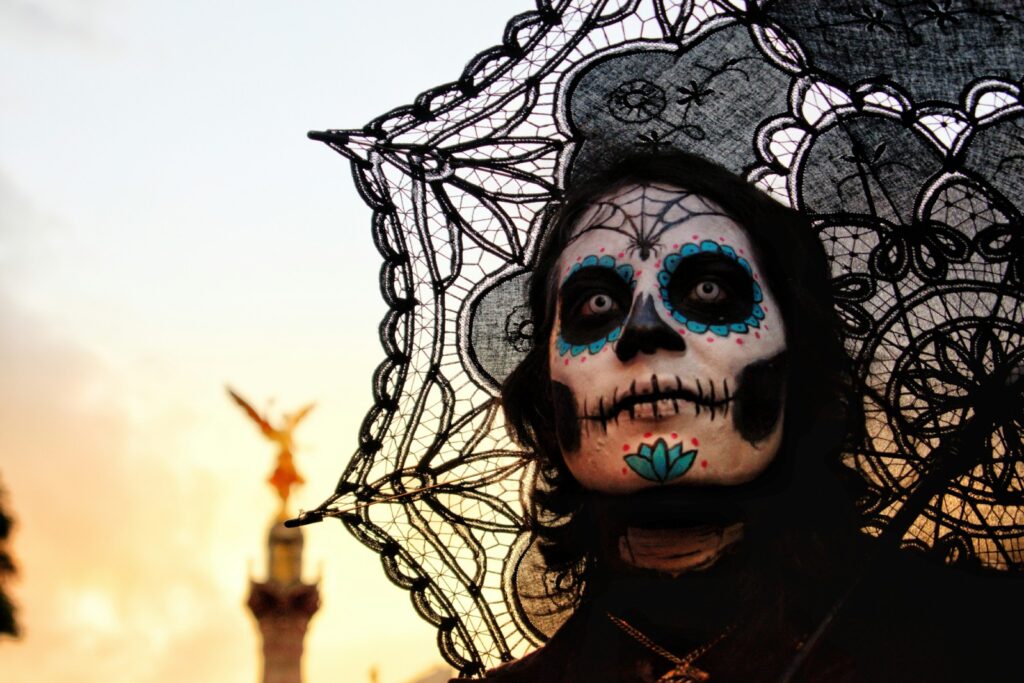
There are some things done right, too. Films like Coco (2017) managed to convey the central idea to the world: that as long as someone remembers us, we are still here. Many Mexican families abroad felt that, at last, someone was explaining their tradition with respect.
Remembering With Joy
What most bewilders newcomers is the joy. How can you celebrate someone who has died with music, pan dulce and laughter?
The Mexican answer is that joy does not deny grief: it keeps it company. Whoever sets out an ofrenda also cries, misses and remembers what was lost. But they do it together, with a full table, telling stories and laughing about Grandpa’s quirks.
There is a valuable lesson in this way of remembering for any culture. Grief does not have to be lived in silence or alone. The dead do not disappear as long as we say their names, cook for them and tell their stories.
That is why Día de Muertos is neither a sad celebration nor a superficial one. It is a celebration of reunion: once a year, the boundary between the living and the dead grows thinner, and the family is whole again.
From Mexico to the World: An Open Table
Mexico does not keep its dead in silence: it invites them home. And today that invitation crosses borders. Wherever there is a Mexican, there can be an ofrenda, a lit candle and a plate served for someone who has gone.
This is the proposal Mexico makes to the world: to remember those we love with joy, and not only with sadness. To say their names out loud, cook what they loved, tell their stories and laugh along with them. To celebrate their lives instead of hiding their absence.
At Casa México Cultural Center, we want to share this way of remembering. We invite you to discover the meaning of the ofrenda, to build your own and, if you wish, to bring a photo of someone you would like to celebrate.
Because in Mexico, the dead are never forgotten: they are awaited and welcomed with a fiesta.
Contact: casamexicoculturalcenter@gmail.com · WhatsApp (236) 862-6164
“Casa México Cultural Center, bridging Mexican culture with the world”
